Debt Functions is a significant aspect of the U.S. economy and impacts people, businesses, banks, and the government. Debt isn’t necessarily bad in today’s economic systems. With proper management, borrowing can aid in economic growth, provide opportunities, and enhance the financial stability. But, heavy debts can also cause financial breakdowns, economic downturns and long term financial strain.
Knowing about Debt Functions in the American economy can help illustrate the flow of money in the financial system and what impact borrowing has on the daily lives of people.
What Is Debt?
Debt Functions is the money that a person borrows from another person, with the assurance of repayment in the future with interest. The borrower gets paid right away, and promises to pay back the lender based on agreed terms.
Debt in the U.S. is found at various levels:
- Personal debt
- Business debt
- Debt that is used in banking and financial institutions.
- Government debt
Debts have various functions and effects on the economy.
Personal Debt in America
Personal Debt Functions is among the most typical types of loans taken out in the United States. Millions of Americans use their credit to finance homes, cars, education and daily purchases.
The most typical types of personal loans are:
Mortgage Debt
Mortgage loans are available to assist families to buy homes. Homes are costly and most purchasers take out finance from banks or lenders and pay it back over a long period of time.
Mortgage debt drives the housing market and also is a major driver of economic activity in the construction, real estate, and related industries.
Credit Card Debt
Credit cards enable consumers to purchase goods and services at the time and pay for them at a later date. A lot of Americans do use their credit cards on a regular basis, as buying things with them is convenient and it is a short-term loan.
However, unpaid balances will be costly if the interest rate is high. If credit card debt is too much, it can cause financial strain on the household.
Student Loan Debt
In the USA, student loans are used to pay for higher education. A lot of students take out loans to go to college or university with the hope that it will provide them with better opportunities to make more money in the future.
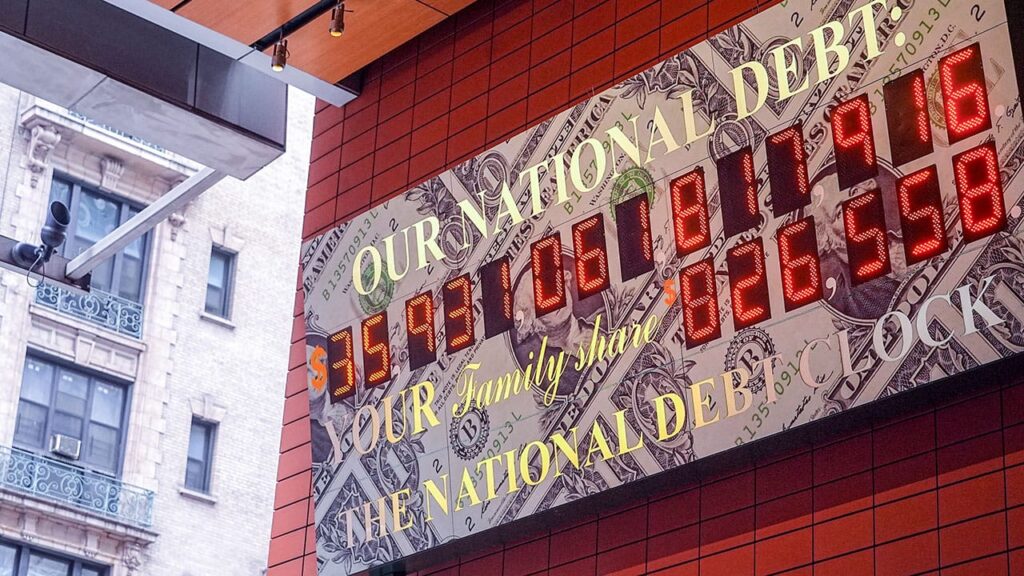
The cost of college has gone up and young people have borrowed more money to attend college, making student Debt Functions a significant economic problem.
Auto Loans and Personal Loans
Auto loans enable consumers to buy automobiles, and personal loans are frequently used for emergency, medical needs, or to consolidate debt.
These types of debt enable consumers to spend, a significant factor in the American economy.
Debt and Economic Growth in Businesses.
Debt Functions plays a crucial role for businesses in running and expanding them. Businesses take out loans to buy machinery, grow their business, employ staff and invest in new technology.
Liquid, low-cost capital will encourage businesses to invest in growth opportunities. This can lead to the creation of employment opportunities, an increase in production and a boost to the economy.
There are bonds that larger companies can issue for investors to fund them, or bank loans and bank lines of credit that smaller companies can utilize.
Borrowing for innovation and economic growth is good business borrowing. But, large corporate Debt Functions can be potentially dangerous in the case of recession when businesses are unable to pay back loans.
The role of financial institutions and banks will be discussed.
Banks are a critical link in the debt chain, linking borrowers and lenders. Banks collect funds from their customers and advance money to consumers and businesses.
One of the primary profit-making methods of banks is the interest they offer on loans. Financial institutions thoroughly check borrowers to minimise the risk of non-payment.
Credit is also a Debt Functions of the banking system, which affects the economy. Is there a link between increased economic activity and lending by banks? Is there a correlation between lending of money from banks and increased economic activity? As lending slows, so can economic growth.
How much does the United States owe?
The US government is also borrowing money on a regular basis. The government accumulates debt when it spends more than it raises in taxes. The government issues treasury bonds and other securities to fill up budget deficits.
Government borrowing is used to provide a base for the following programs:
- Infrastructure projects
- Healthcare
- Defense
- Education
- Social Security
Government bonds are relatively safe investments, and are bought by investors, banks, foreign governments, and financial institutions.
Government Debt Functions may be appropriate in times of crisis, but very high levels of debt may raise issues over sustainability of the debt.
Debt is affected by interest rates.
One of the most significant factors of the debt system is interest. Interest is the price to borrow money and has a direct impact on the consumers, businesses and governments.
The Fed acts as the interest-rate regulator in order to control inflation and economic growth.
Low Interest Rates
In times of low interest rates:
- Borrowing becomes cheaper
- Consumers spend more
- Businesses invest more
- The economy usually grows when an economy grows.
Low rates promote lending and growth.
High Interest Rates
With an increase in interest rates:
- Borrowing costs will increase
- Loan demand decreases
- Consumer spending could decrease.
- In the future, businesses can postpone investments.
Increased rates are typically employed to help curb inflation, which can also slow economic growth.
The positive impact of debt on the economy.
Debt is a useful tool that can offer a great number of economic advantages if utilized responsibly.
Encourages Investment
Borrowing enables companies and individuals to invest in their businesses when they need to do so but don’t have the funds to do it right away. This facilitates innovation, education and ownership of property.
Supports Consumer Spending
A considerable amount of the U.S. economy is fueled by consumers spending money. Households can buy houses, cars, and products that stimulate economic growth due to access to Debt Functions .
Helps During Emergencies
Debt can help you out during a crisis, such as a medical emergency, or a natural disaster, or a recession in the economy.
The dangers of debt overload.Risks associated with excessive debt.
While debt may be a good thing, too much of it can be a bad thing.
Financial Stress
Too much debt in a person’s life can result in default, lower credit scores and bankruptcy.
Economic Crises
The 2008 financial crisis was a result of large levels of risky debt, leading to significant economic damage in the United States and globally.
Reduced Future Growth
High government debt could constrain future options on government spending and lead to higher interest cost to taxpayers.
Managing Debt Responsibly
There is a need for responsible debt managements for long-term economic stability. Borrowers should:
- Don’t spend more than they can afford to pay back
- Keep up good credit practices.
- Do a thorough comparison of loans.
- Avoid unnecessary debt
- Build emergency savings
Conclusion
Debt is a big player in the United States economy and plays a significant role in almost all financial activities. Debt plays a role in economic growth and opportunity, in personal and home loan applications, and for businesses or government borrowing.