Introduction
If you’re thinking of taking out a loan in the United States, it’s crucial you understand how monthly loan payments are computed. When you are considering applying for a mortgage, auto loan, personal loan or student loan, your monthly loan will make a difference in what you need to save per month. Understanding the process behind the calculation of these payments can help you negotiate loan offers, maintain a healthy financial life, and make sound financial choices.

Fundamentals of loan repayments.
There are usually two parts to a monthly loan payment on a loan – principal and interest. The principal refers to the sum of money that is borrowed from the lender. The amount of money charged for borrowing that money is called interest!
The monthly loan by the borrower consist of a portion that reduces the principal balance, and a portion that pays interest costs. As time goes on the balance reduces until the loan is paid back.
The monthly installment will vary depending on the loan amount, interest rate and the length of the loan.
The primary factors involved in monthly payments are listed below:
There are three main factors that will affect the amount of a monthly loan payment.
First is the amount of loan. The more you borrow, the larger your payments will be each month, as there will be more debt to pay off. The second is the rate of interest. The higher interest rates would result in higher monthly payments and cost of borrowing. Lower interest rates means that the entire loan amount is less.
Third, the duration of the loan. More months of repayment means payments are made over a longer period, thus lowering their amount. But, there is usually more interest on the loan for longer terms.
Understanding Loan Amortization
Amortization is the process used in most monthly loan in America. An amortized loan is one that is paid back by a fixed amount of money each month for a set number of months.
The initial payment of a loan consists of a higher percentage of interest. As the balance of the loan goes down, the principal portion of each payment is increased.
This gradual movement makes it easy for the borrowers to pay off their loans in full at the end of the loan term. Amortization schedules are often seen in mortgage loans, auto loans, and numerous other types of personal loans.
The Standard Loan Payment Formula
On fixed rate monthly loan, the monthly calculations are done using a mathematical formula.
The relationship between the amount of loan, the rate of interest and the number of years may be represented as:
M=P\frac{r(1+r)^n}{(1+r)^n-1}
In this formula:
M = monthly payment.
P is the amount of the loan.
r is the monthly interest rate.
n is the number of payments made per month.
Even if you don’t have to perform the calculations yourself, knowing the formula will help you see how changes in interest rates or loan terms influence monthly payments.
Example of a Monthly Loan Payment
Imagine a borrower who has borrowed $20,000 from the bank for the car, with an annual interest rate of 6% and a 5 year payoff period.
The annual interest rate is divided by 12 to get a monthly rate. A five year payment period is 60 monthly payments.

If the formula for calculating monthly loan payments is applied, the monthly payment comes out to about $387. If the interest rate is fixed, this payment will not change over the term of the loan.
The payment remains consistent, but each month amortization (principal and interest) varies because the principal that is paid off each month varies.
Stability of payments and rate:
Fixed-rate loans are popular in the United States because they offer a fixed monthly payment. Interest rate is fixed during the repayment period.
Since it remains constant, the borrower is aware of the amount he or she will pay each month. This stability lends more certainty and ease of budgeting.
Fixed rates may be available for mortgages, personal loans, and auto loans.
Adjustable Rate Loans and Mortgage Payments
There are loans that do not have fixed interest rates. A variable rate loan is a loan that can have a higher or lower rate depending on the market.
If the interest rate changes, then the monthly payment will change as well. This can make it more hard to budget as repayments may not be known in advance.
Variable rate loans can have lower initial rates, but also have the potential of higher rates in the future.
Any extra cost associated with payments.
In some instances, monthly loan repayments may include more than the principal and interest.
Property taxes, homeowner’s insurance, and mortgage insurance may be part of mortgage payment. These extra expenses are to be recovered by the lender and forwarded for the borrower’s benefit.
This means that the monthly mortgage payment might be much greater than the principal and interest payments.
Borrowers should always carefully read loan disclosure so that they are aware of all costs that are part of their monthly payments.
What happens to a loan if payments are made as well as the regular ones.
If there are extra payments made, the total cost of the loan can be reduced. The most common distribution method for additional payments is that they go on the principal balance.
The lower the principal, the less interest you’ll have to pay, and potentially the sooner you can pay it off. Any extra payment, no matter how small, repeated over time can make a huge difference.
This is one way borrowers are able to pay off loans quicker and thus lower the long-term debt costs.
Using Online Loan Calculators
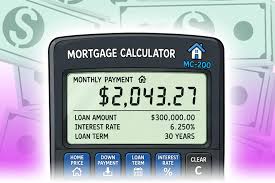
Numerous lenders and financial websites offer a loan calculator to help you make instant calculations of monthly payments. These tools enable borrowers to put in the loan quantity, interest rate, and term.
Loan Calculators can easily help you check out various loan scenarios before you apply. They assist borrowers with the consequences of varying the loan terms on affordability and overall cost of paying back the loan.
Conclusion
In America, the monthly loan payments are performed by combining the amount of loan, interest rate and the term for repayment. Most loans are amortized, meaning the amount of the loan is paid down over time. The method by which payments are calculated helps the borrower to assess the offers of various loans, manage their finances and not be taken aback by anything. Understanding the components of monthly payments is crucial when considering any type of loan, whether it’s for a house, a car, education, or personal expenses.
When it comes to any type of loan, whether it’s for home, car, education, or personal expenses, understanding the components of monthly payments can be the key to making better borrowing choices for a successful financial future.